
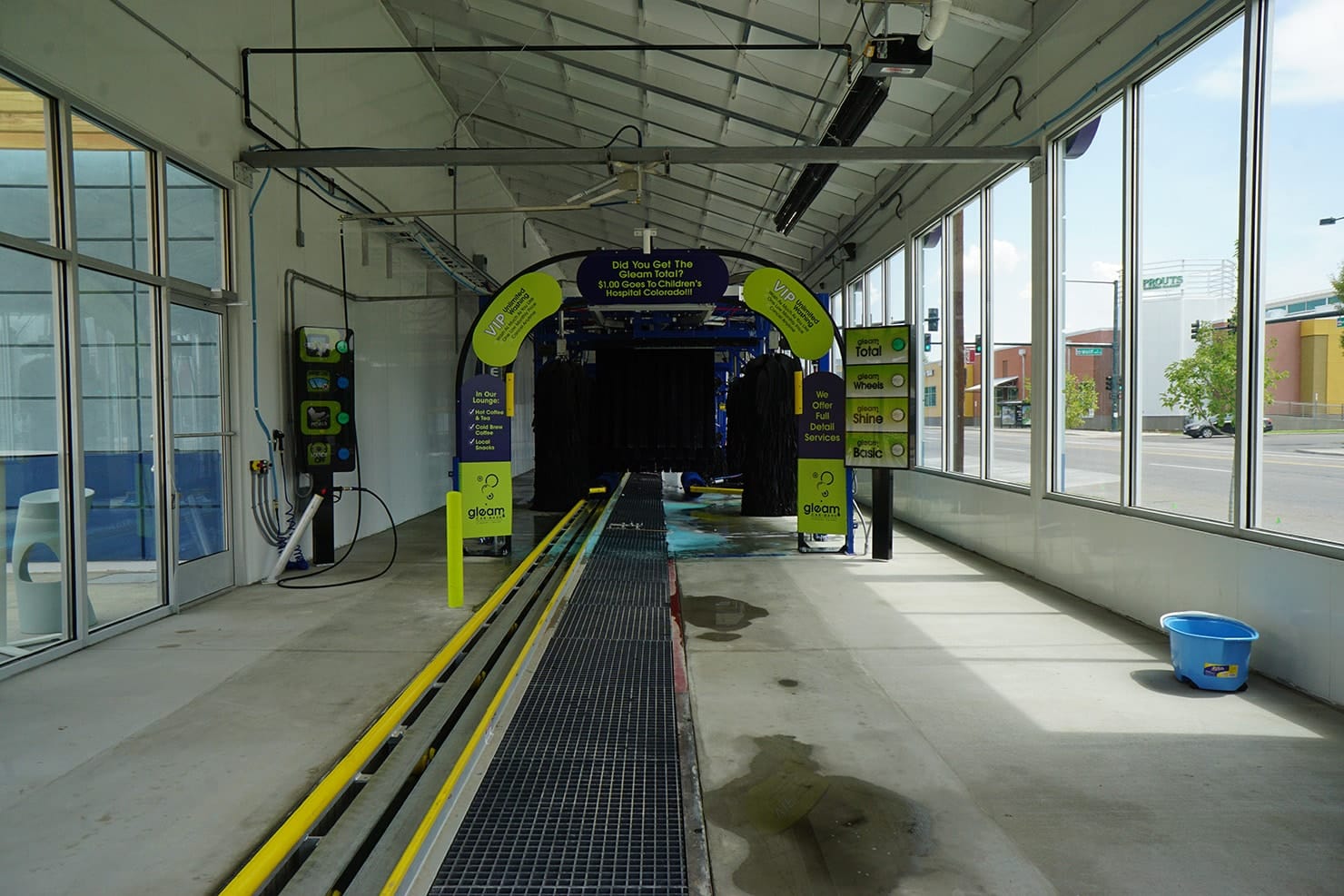
Car Wash Roofing in Greenville
Car Wash Roofing in Greenville
Car wash roofing in Greenville, SC built for tunnel humidity, detergent vapor, and canopy transitions. PVC and TPO systems for express, in-bay, and self-serve washes.
Car Wash Roofing Built for the Wettest Building You Own
A car wash is the only commercial building we work on where the roof is fighting moisture from both sides at once. Rain and Greenville's summer humidity press down from above, and the wash tunnel pushes warm chemical-laden steam up against the underside of the deck all day. We have re-roofed express tunnels along Woodruff Road, in-bay automatics near the Pelham Road and I-85 interchange, and self-serve sites tucked into the Augusta Road and Wade Hampton corridors, and the failure pattern is almost always the same: it starts on the inside, where nobody is looking, long before a stain shows up on the lobby ceiling.
Greenville keeps generating new wash sites because the traffic counts support them. The volume moving daily across the Woodruff Road retail spine, the commuter flow on Pelham Road and Haywood Road, and the steady growth out toward Five Forks, Simpsonville, and Greer all feed express-tunnel development. That demand is good for owners and hard on roofs. A tunnel that runs open hours seven days a week never gets the dry-out period a normal building enjoys overnight, so the deck and fasteners stay loaded with vapor far longer than a standard membrane was ever tested for.
Why the Wash Bay Is the Highest-Risk Roof Zone
The stretch of roof directly over the active tunnel takes the worst of it. Hot water, foaming detergents, tire-shine compounds, drying agents, and spot-free rinse chemistry all atomize during the cycle and ride the warm air column straight up to the deck. From below, that vapor condenses on the underside of the metal deck and on the steel fasteners holding everything down. We routinely pull screws out of older tunnel roofs and find the heads rusted to a fraction of their original thickness while the membrane on top still looks serviceable. That is backside corrosion, and a contractor who only walks the surface will miss it every time.
Membrane chemistry matters more here than on any other building type. We lean toward PVC over the tunnel because its plasticizer package stands up to the alkaline detergents and waxes used in commercial wash programs far better than TPO or EPDM do over the long haul. Before we write a specification, we ask what is actually in the dispensing room. The same tunnel running a high-pH presoak and a hot carnauba wax needs a different answer than a touchless site running a milder chemistry, and we would rather know that before the membrane is on the roof than after a warranty claim gets denied.
Matching the System to How Your Site Operates
Greenville car washes do not all look alike, and the roof scope follows the format:
- Express exterior tunnels run the full chemical menu at high volume, so they carry the most aggressive vapor load and the densest exhaust penetrations.
- In-bay automatics see less continuous vapor but frequently have drainage laid out as an afterthought, which leaves water ponding on the roof over the equipment bay.
- Self-serve wand bays have the lightest chemistry but the most open structure, so wind-driven rain and flashing details at the bay openings drive most of the leaks.
We inspect drainage on every car wash regardless of format. Ponding water over a humid tunnel is a double problem: it stresses the membrane from above while vapor attacks the deck from below, and the two together shorten a roof's life faster than either one alone.
Canopies, Vacuum Stations, and the Transitions That Leak
On express sites the vacuum canopy and the exit canopy are their own roofing project. They are usually metal or membrane-clad, fully exposed to weather, and constantly hit with vehicle exhaust and overspray from tire dressing. The single most common failure point we find on Greenville express washes is the transition where a canopy ties back into the main building or where a canopy drain connects into the building's storm system. Those joints move, they take mechanical abuse, and they were often detailed for appearance rather than for water. We treat every canopy-to-building transition and every canopy drain tie-in as a discrete flashing item with its own detail, not as part of the field membrane.
Most owners cannot afford to close, and they should not have to. We sequence tunnel-roof work into the early-morning and late-evening windows when the wash is shut, dry the deck in before reopening, and keep crews and material staged clear of the customer drive lanes during business hours. Exterior building areas, equipment-room roofs, and canopy work can usually proceed during open hours with simple traffic control so vehicles stay out of the work zone.
The Roofing Problems We Solve for Greenville Wash Owners
- Backside deck and fastener corrosion from continuous tunnel humidity, found by checking the underside, not just the surface.
- Detergent and wax attack on the membrane, addressed with a PVC system matched to your actual chemical program.
- Oversized exhaust and HVAC curbs that move steam out of the tunnel, flashed for continuous airflow rather than with stock details.
- Ponding over the equipment bay, corrected with tapered insulation that moves water to the drains.
- Chronic canopy-transition leaks, re-flashed and tied back into the building correctly.
If you own or manage a wash anywhere from downtown Greenville out to Mauldin, Greer, or Simpsonville, we will walk the roof, check the deck from below, review your chemistry, and tell you honestly whether you are looking at targeted repairs or a full replacement. The goal is a roof built for the building you actually run, not a generic flat-roof spec borrowed from a strip center.
Why do you favor PVC over the wash tunnel instead of TPO?
PVC holds up to the alkaline detergents, presoaks, and wax compounds used in commercial wash programs far better than TPO or EPDM over a long service life. We typically specify a 60-mil PVC, fully adhered or fleece-back, over the tunnel so the membrane is not fluttering from tunnel air pressure and there is no fastener field corroding from the steam below. Outside the tunnel, on the equipment room, lobby, and vacuum canopy, a standard TPO or PVC system is usually appropriate.
Will a roofing warranty cover chemical exposure from my wash?
Most standard single-ply warranties specifically exclude chemical attack. Before we specify anything over a tunnel, we confirm with the manufacturer that your actual chemical program is compatible with the membrane and that the warranty will stand given those conditions. Some manufacturers offer chemical-exposure or car-wash-specific warranties, and we identify those options up front rather than discovering the exclusion after a claim.
How do you handle the exhaust fans and HVAC curbs over the tunnel?
Wash tunnels run high-volume exhaust to pull steam and chemical vapor out, and those penetrations need oversized curbs and flashings built for constant airflow and chemical exposure. Stock HVAC curb details do not hold up here. We treat every penetration as its own item and match the detail to the equipment and the operating conditions.
Can you re-roof while we stay open?
Yes, with the right sequencing. We schedule tunnel-roof work into your early-morning or late-evening closed windows and confirm the deck is dried in before you reopen. Exterior building and canopy work can usually run during business hours with traffic control that keeps cars clear of the crew.
Do you cover the vacuum and exit canopies too?
Yes. Vacuum canopies, exit canopies, and the transitions where they tie into the main building are part of our scope. Canopy membrane or panel replacement, gutters and downspouts, and canopy-to-building flashing repair are all standard items we address.
Request Roof Walk