
Mixed-Use Development Roofing in Greenville
Mixed-Use Development Roofing in Greenville
Mixed-use development roofing in Greenville, SC. We separate podium waterproofing from tower membrane, coordinate warranties across retail and residential, and phase work around occupied tenants.
Mixed-Use Development Roofing in Greenville, SC
Greenville's downtown has spent the last decade filling in with buildings that try to be three or four things at once. Camperdown, the projects along the Reedy River and Falls Park, the infill rising off South Main and around the Village of West Greenville, and the live-work-shop blocks pushing toward Verdae and the Woodruff Road corridor all stack retail at the street, parking in the base, offices in the middle, and apartments or a hotel up top. Each of those uses sits under a different piece of the roof envelope, and treating that envelope as one flat plane is how mixed-use buildings end up leaking into a tenant's ceiling within a few years of opening.
The reason these projects are harder than a single-use building is that the uses interact vertically. Retail hours, office hours, and residential occupancy never line up. The mechanical loads stacked on the roof serve different systems with different warranties. And the liability if water gets in is shared across the developer, the GC, the condo or apartment owner, and the ground-floor tenant. We scope a mixed-use roof by mapping who and what sits under each zone, then specifying each zone for the load and exposure it actually carries.
Podium Waterproofing Is Not Flat Roofing
The most consequential surface on a Greenville mixed-use building is usually the one nobody calls a roof: the podium deck between the parking or retail base and the residential or office floors above. That deck is occupied, planted, and often driven on, which puts it under structural deflection, constant hydrostatic pressure in planter areas, root intrusion from landscaping, and pedestrian or vehicle traffic. A standard low-slope roofing membrane is the wrong product for those conditions and tends to fail inside five years. We specify traffic-bearing waterproofing assemblies, drainage composites, and root barriers for these decks, and we coordinate the insulation and load path with the structural engineer rather than guessing at it.
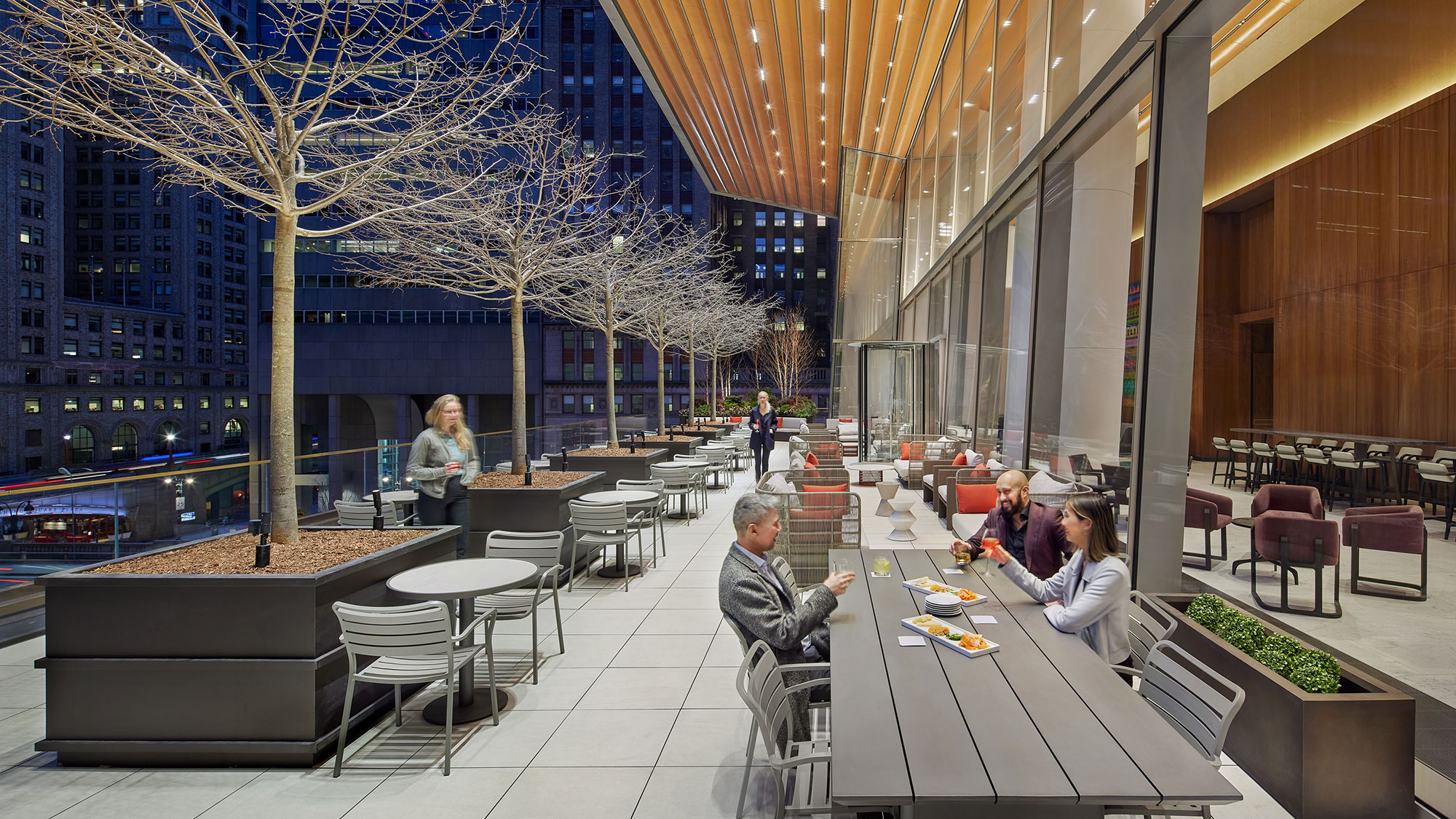
The amenity decks on top of the residential or hotel portion follow the same logic. A rooftop pool deck, dog run, or lounge terrace needs a traffic-bearing assembly under its finish surface, integrated with the deck finish contractor's work and warrantied as a system. Putting a field membrane under a paver terrace and hoping it holds is a common and expensive mistake.
Coordinating Warranties Across Retail, Residential, and Tower
A mixed-use project often ends up with several distinct roof and waterproofing areas: the low-slope membrane over the retail and back-of-house, the podium waterproofing, the tower roof with its mechanical penthouse and elevator overrun, and the amenity decks. Each of those can carry its own manufacturer warranty, and if the boundaries and tie-ins between them are not detailed and registered correctly, a leak at a transition becomes the kind of finger-pointing dispute that drags on for years. We handle the warranty coordination as part of the job, making sure each assembly is registered, the transitions between them are detailed, and the owner ends up with a clear map of what is covered where.
Adaptive Reuse Brings Its Own Roof Questions
A good share of Greenville's mixed-use stock is not ground-up. The old textile and warehouse buildings in the Village of West Greenville and along the rail corridor are being converted into ground-floor retail and makers' space with apartments above, and those conversions inherit whatever roof and structure the original mill left behind. Before anyone counts on that roof for a thirty-year tenant, the existing deck has to be evaluated for capacity, the original assembly cored for hidden moisture, and the new mechanical loads from added residential HVAC checked against what the structure can carry. We sort out what stays, what comes off, and what the converted building actually needs rather than assuming an old industrial roof is ready for a new mixed-use life.
Phasing Around Occupied Tenants Downtown
Most of this work in Greenville happens above a running building. Restaurants and shops are open at the street, residents are home in the evenings, and a hotel never closes. Downtown noise expectations, ground-floor retail access, and resident parking all constrain when and how we can work. We build a phasing plan before mobilization that sequences the loud and disruptive work, contains dust and debris above occupied public space, coordinates elevator and common-area access with building management, and confirms a watertight dry-in in writing at the end of every workday. We do not leave a deck open over occupied units.
Common Questions About Mixed-Use Roofing in Greenville
What is the difference between roofing and waterproofing on a podium or amenity deck?
A roofing membrane is built for drainage and the occasional maintenance technician walking on it. A podium or amenity deck is occupied, often planted, and sometimes driven on, so it needs a traffic-bearing waterproofing assembly that can take structural movement, standing water in planters, root intrusion, and foot or vehicle loads. Using a standard roof membrane on a plaza or terrace is an incorrect specification, and it usually fails within a few years.
How do you keep one warranty problem from turning into a dispute across the whole building?
We treat each roof and waterproofing area as its own registered system and detail every transition between them. The retail membrane, the podium deck, the tower roof, and the amenity decks each get the right assembly and the right warranty, and the owner receives a clear map of which warranty covers which area. That removes the ambiguity that turns a single leak into a multi-party argument.
Can you do this work while the building is occupied?
Yes, and most of our mixed-use work downtown is on occupied buildings. We phase the job around retail hours and residential occupancy, contain dust and debris above any public or occupied space, coordinate access and elevators with building management, and confirm a watertight condition at the end of each day. We never demobilize with an open deck over occupied units.
Who do you coordinate with on a mixed-use project?
On a ground-up or major renovation we work alongside the general contractor, the mechanical and plumbing trades whose equipment penetrates the roof, the structural engineer on deck loading, and any building envelope consultant the owner has engaged. We work inside the project's submittal, mock-up, and quality-control framework rather than around it.
Our development has retail, apartments, and a parking deck. Do those need different roof systems?
Almost always, yes. The retail and back-of-house typically get a low-slope membrane, the deck between parking and the floors above needs podium waterproofing, the residential tower roof has its own membrane and penthouse details, and any rooftop terrace needs a traffic-bearing deck assembly. We scope each one for its real exposure rather than applying a single product across the whole building.
Request Roof Walk