
Insurance Claim Coordination in Greenville
Insurance Claim Coordination in Greenville
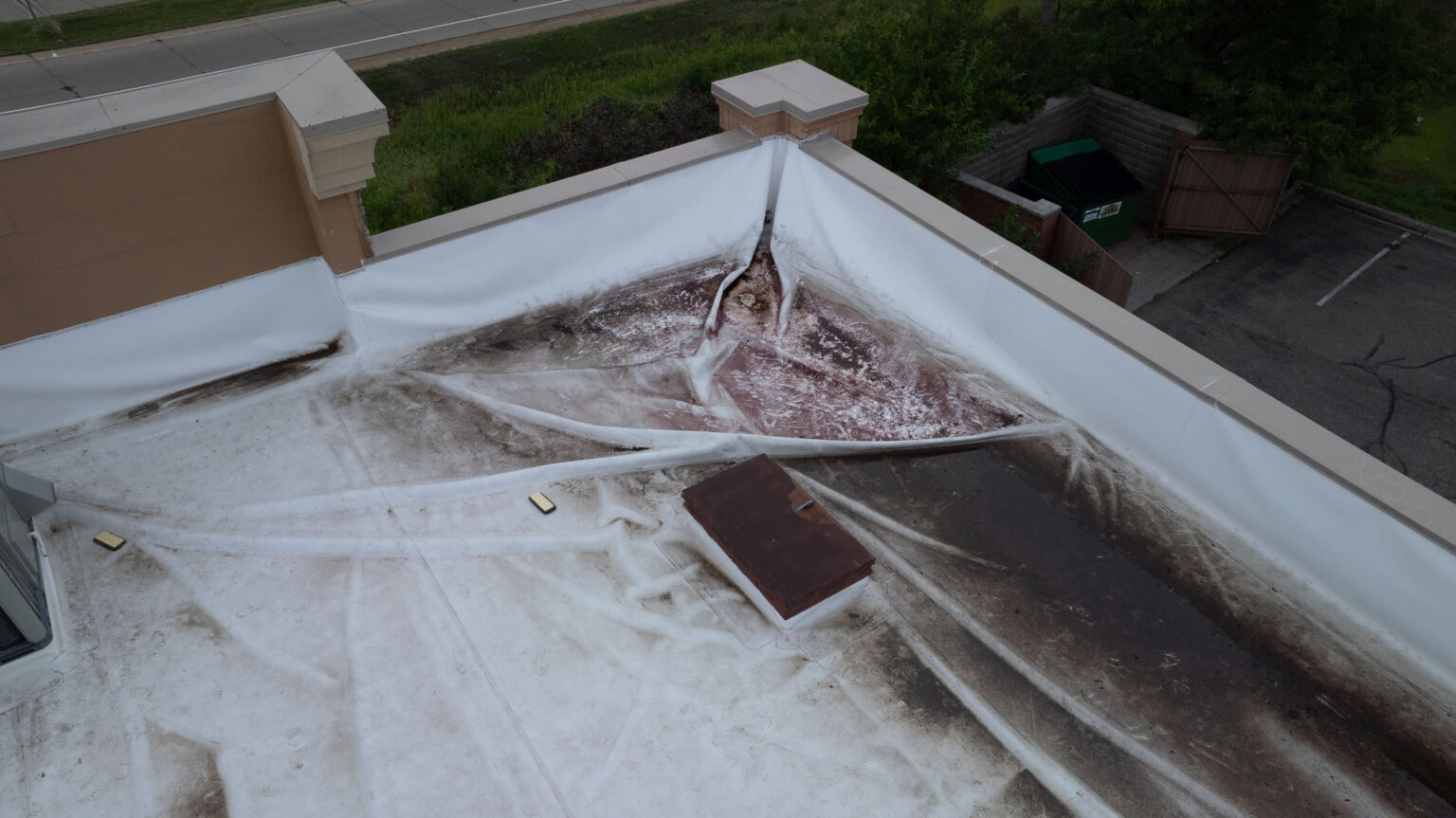
Roof-side coordination for Greenville commercial insurance claims: adjuster scheduling, tenant access planning, and documentation handoff from your roofing contractor.
A roof claim on an occupied building usually involves more people than the roof itself - a property manager, an adjuster, tenants below, and sometimes a portfolio owner who isn't on site.
We’re your roofing contractor, not a public adjuster - our coordination role covers roof access, documentation, and scheduling, not the claim decision itself.
Coordinating Roof Access Around Tenants and Operations
Occupied buildings make roof access the hardest part of a claim to schedule, not the inspection itself. A downtown office tower near Main Street may need lobby coordination and after-hours access; a distribution building along the I-85 corridor toward Spartanburg may need to work around loading-dock schedules and shift changes; a mill-conversion property with ground-floor retail may have multiple tenants who each need separate notice before crews or adjusters are on the roof. We build the access plan before the adjuster's visit is scheduled so the roof walk doesn't get delayed by a locked stairwell or a tenant who wasn't told.
For portfolio owners managing several Greenville-area properties at once, we keep that access information - contacts, entry points, equipment locations, tenant restrictions - on file so repeat inspections and follow-up visits don't start from scratch each time.
Keeping the Adjuster, Property Manager, and Roof Crew on the Same Page
Most of the friction in a commercial claim comes from information that didn't reach the right person in time - an adjuster who shows up without knowing the roof has an active leak, a property manager who finds out the site visit happened after the fact, or a repair crew that arrives before the adjuster has signed off on scope. We schedule the roof walk directly with the carrier's inspection window, confirm who needs to be present, and share our own documentation with the property manager ahead of time so nobody is meeting the roof's condition for the first time on inspection day.
When a claim covers more than one building or phase - common on larger manufacturing and warehouse portfolios near the Greer industrial corridor - we track which sections have been inspected, which are still pending, and which repairs are approved versus still under review, so the property manager has one clear status instead of piecing it together from separate emails.
From Documentation to Scope: What We Hand Back
Coordination also means making sure the paperwork moves with the roof. After each inspection or adjuster visit, we hand the property manager a written summary: what was reviewed, what was found, what's still outstanding, and what the next step is. If a section of roof gets approved for repair while another is still pending review, that scope split is documented clearly so nothing gets started, or delayed, by mistake.
To be clear about our role: we're a roofing contractor, not a public adjuster or attorney. We don't file claims, negotiate settlements, or guarantee any outcome - we coordinate roof access, documentation, and scheduling so the claim moves without avoidable delays.
Questions About Claim Coordination
What does 'coordination' actually include?
Scheduling the roof walk with the carrier's inspection window, arranging tenant or operations access, being present during the adjuster's visit, and sharing our documentation and status updates with the property manager. It doesn't include negotiating the claim or making coverage decisions.
Can you work directly with our property management company?
Yes. We regularly coordinate with property managers and portfolio owners who aren't on site day to day, and we can keep access details and documentation on file for repeat visits.
How do you handle claims that involve multiple buildings or phases?
We track each section or building separately - inspected, pending, or approved - and give the property manager one consolidated status rather than separate updates per site visit.
What if tenants below the roof need advance notice?
We build tenant notice into the access plan before scheduling any roof walk or repair work, based on whatever notice period the property manager or lease requires.
Do you coordinate with the insurance company directly?
We coordinate scheduling and share our roof documentation with whoever the carrier assigns, but we don't act as the property owner's representative in the claim itself - that stays between the owner and the carrier.
Request Roof Walk