
Solar Roof Integration in Greenville
Solar Roof Integration in Greenville
Solar-ready commercial roofing in Greenville, SC. We coordinate membrane, racking penetrations, structural loads, and warranties so rooftop PV doesn't shorten your roof's life.
Getting Solar Onto a Greenville Roof Without Wrecking the Roof
A rooftop array is supposed to last twenty-five years or more. The membrane under it almost never does. That single mismatch is the reason we treat solar on a Greenville commercial building as a roofing decision first and an energy decision second. Across the big-box and distribution rooftops along Woodruff Road, the manufacturing plants strung out on the I-85 corridor between here and Spartanburg, and the renovated industrial buildings filling in around the Village of West Greenville, we keep seeing the same avoidable problem: panels bolted or ballasted onto a membrane that had five or six good years left, which then forces an expensive array teardown the moment the roof needs replacing.
We do not sell or install photovoltaic systems. What we do is make sure the roof is the right roof, prepared the right way, before a solar EPC ever shows up with racking on a truck. That role matters more than most owners expect, because the solar contractor's incentive is to mount panels, not to vouch for what is underneath them.
Start With the Membrane's Remaining Life
The first question on any solar project is brutally simple: how many years does this roof have left? We core the assembly, scan it for trapped moisture, check the membrane for embrittlement and seam condition, and give you an honest remaining-service-life number. If the roof has fifteen-plus years in it, mounting an array on the existing membrane is reasonable. If it has seven years or fewer, you are almost always better off reroofing now and setting solar on the new system, because removing and reinstalling an array during a future tear-off can add tens of thousands of dollars to that later project. Owners on tighter buildings near downtown, where roof access is awkward and crane staging is limited, feel that penalty even harder.
Penetrations, Racking, and Where Leaks Start
Every solar mounting approach interacts with the roof differently, and each one fails differently if it is handled carelessly.
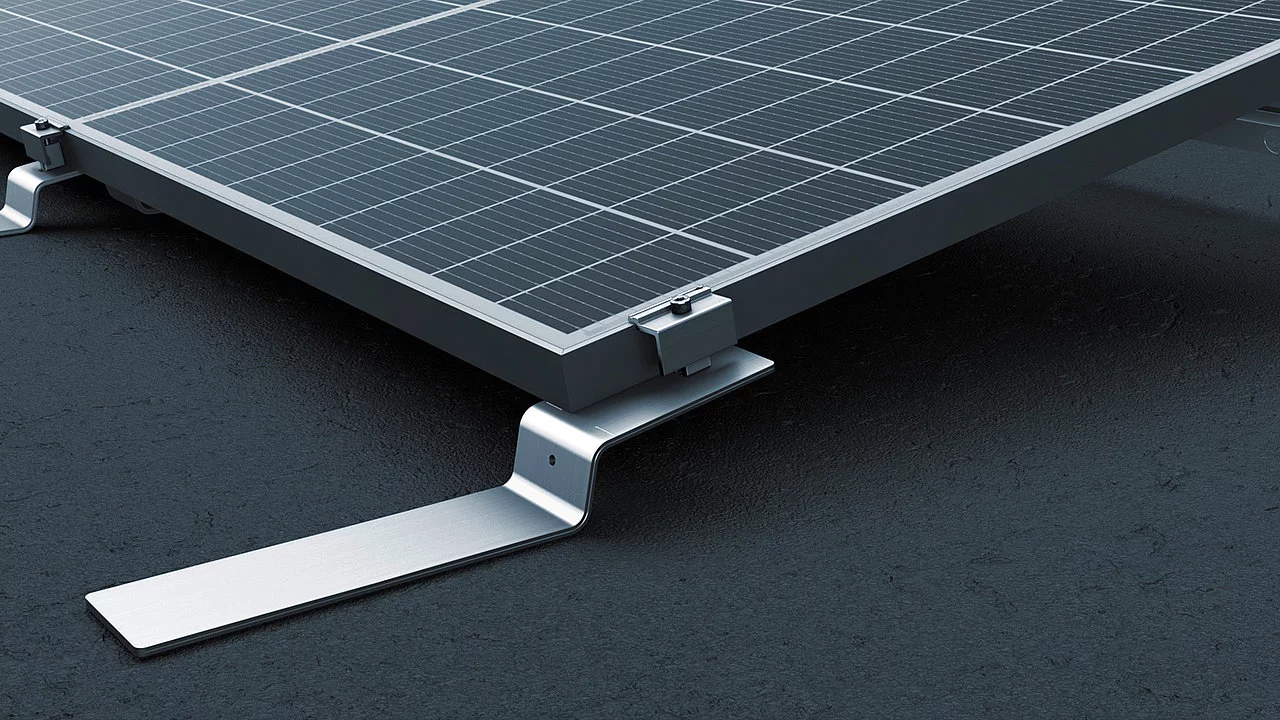
- Ballasted racking sets weighted trays or pavers on the membrane with no fasteners through it. It is the cleanest option for the watertight layer, but it loads the structure, and on the older steel-deck buildings common in Greenville's mill-era stock that added dead load has to be checked against the original design before anyone commits to it.
- Mechanically attached racking anchors feet through the membrane and into the deck. Every one of those feet is a penetration that has to be flashed to the membrane manufacturer's detail, not capped with a generic boot, or it becomes a slow leak that nobody finds until insulation is soaked.
- Hybrid systems mix ballast with a smaller number of anchors where wind uplift demands it. They still carry penetration risk and still load the deck, just in different proportions.
Greenville sits in an upstate wind exposure that is milder than the coast but still real, and the racking has to be engineered for the uplift this site actually sees. We coordinate with the solar engineer so the attachment pattern and the roof's wind-uplift rating agree with each other instead of fighting.
Conduit Is a Roofing Detail Too
The wiring that carries power from the array down to the building's service almost always crosses the roof, and this is where roofer-and-solar coordination breaks down most often. Conduit strapped flat to the membrane saws into it with thermal movement. Conduit penetrations flashed by an electrician with whatever sealant is in the truck become chronic leaks. We set the conduit routing and the through-roof penetration details with the EPC before any wire is pulled, use proper standoffs and pipe boots rated for the membrane, and keep the penetration count as low as the electrical design allows.
Weight, Uplift, and the Building Underneath
Solar adds dead load and changes how wind grabs the roof. A flat distribution roof off Augusta Road carries ballast differently than a 1970s deck downtown that was never designed with panels in mind. We make sure the structural picture is confirmed early: dead load of the array and ballast, the uplift forces on both panels and membrane, and whether tapered insulation or drainage has to be reworked so ponding does not collect against rows of racking. None of that is the solar contractor's job to verify, and skipping it is how arrays end up sitting in standing water.
Protecting the Membrane Warranty
Most major single-ply manufacturers will allow an array on a warranted roof, but only on their terms: approved walk pads and protection layers under the racking, approved penetration details at every anchor, and a pre-installation review by the manufacturer's representative. Install solar without that review and you can void the warranty on the entire roof, not just the area under the panels. We run the manufacturer coordination, document the details, and make sure the warranty survives the project so a future leak is still covered.
What Tends to Work in This Market
For Greenville commercial buildings going solar, a reflective white TPO or PVC membrane at 60 mil is the most common starting point. The light surface runs cooler under the panels, which helps array output, and it gives ballasted racking a stable, uniform bed. On structures where added ballast weight is a concern, a fully adhered system avoids the extra dead load. We will tell you which fits your deck rather than defaulting to one answer.
How We Sequence a Solar-Plus-Roof Project
When solar and a reroof happen together, the order is not negotiable. The membrane goes down and gets inspected first. Conduit penetrations are flashed by our crew before any wire is run. Only then does racking get placed and the array mounted. We hold a pre-construction meeting with the solar EPC to put the sequence, the conduit plan, the penetration specs, and the final inspection requirements in writing so both the roofing warranty and the solar warranty register cleanly.
Common Questions From Greenville Owners
Should we reroof before adding solar, or mount it on the roof we have?
It comes down to remaining membrane life. Fifteen-plus years left, the existing roof is usually fine to build on. Seven years or fewer, reroof first, because paying to lift and reset an array during a later tear-off costs far more than doing the roof now while access is open.
Do the panel mounts have to puncture the roof?
Not always. Ballasted racking holds the array down with weight and never penetrates the membrane, which is why it is popular on flat Greenville roofs that can carry the load. Where structure or wind uplift rules out ballast, mechanically anchored feet are used, and each one is flashed individually to the manufacturer's detail.
Will solar void our roof warranty?
Not if it is done by the book. Major membrane manufacturers permit arrays on warranted roofs when their protection layers, penetration details, and pre-install review are followed. We handle that coordination so the warranty stays intact across the whole roof.
What about the extra weight on an older building?
That is exactly why we confirm structural capacity before committing to ballast. On Greenville's older mill and mid-century decks the original design load may be modest, and we will steer you toward lighter mechanically attached or fully adhered options when ballast does not pencil out structurally.
Do you actually coordinate with our solar installer?
Yes, directly. We sit down with the EPC before work starts to lock the sequence, the conduit routing, the penetration details, and the inspection sign-offs both warranties require, so the roofing scope and the solar scope are not improvised on the roof.
Request Roof Walk